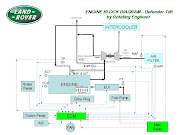
Source:
What is Electric Boost?
Electric boost uses electrical energy to drive a compressor that provides additional air density to the engine, as opposed to using mechanical energy from the engine like traditional methods (belt driven superchargers or exhaust driven turbochargers).
Generating pressure by itself does not require much energy.
Example: The small tire pump you plug into your cigarette lighter is a compressor that uses very little electrical energy and can pump a tire up to 70 psi, but due to the devices low power draw, the small rate of air-flow coming from the straw-sized air-source requires over 10 minutes to pump a flat tire up to 35psi, and over an hour to reach 70 psi. Obviously useless if you placed this device on an engine intake as it would just create a massive restriction.
Example: The small tire pump you plug into your cigarette lighter is a compressor that uses very little electrical energy and can pump a tire up to 70 psi, but due to the devices low power draw, the small rate of air-flow coming from the straw-sized air-source requires over 10 minutes to pump a flat tire up to 35psi, and over an hour to reach 70 psi. Obviously useless if you placed this device on an engine intake as it would just create a massive restriction.
Generating air-flow by itself also does not require much energy.
Example: A radiator fan uses relatively little electrical energy, and can flow 400 to 700 CFM. However, just blowing air on something does not generate pressure, unless it there is both high air-flow rate AND air-speed. This is proven when one looks at how a "RAM-AIR" scoop works. A "RAM-AIR scoop only develops .07psi at 80 MPH, but can develop .38psi when the car is traveling at 180 MPH with a perfectly efficient ram-air scoop like the ones that are seen on Indy cars or above the hood of drag cars.
Example: A radiator fan uses relatively little electrical energy, and can flow 400 to 700 CFM. However, just blowing air on something does not generate pressure, unless it there is both high air-flow rate AND air-speed. This is proven when one looks at how a "RAM-AIR" scoop works. A "RAM-AIR scoop only develops .07psi at 80 MPH, but can develop .38psi when the car is traveling at 180 MPH with a perfectly efficient ram-air scoop like the ones that are seen on Indy cars or above the hood of drag cars.
Generating air-flow AND pressure together DOES require a large amount of energy.
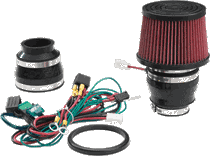
The e-RAM Axial-Flow Electric Supercharger:
The e-RAM Electric Supercharger produces on demand, the pressurizing effects greater than a perfectly designed ram-air system traveling at over 220 MPH, even when your car is standing still. To accomplish this, the e-RAM incorporates a custom high-power electric motor built specifically to our proprietary specifications, drawing over 830WATTS of electrical energy (1.2HP of electrical energy directly from the car battery) while running at a speed of 25,300rpm. We mate this up to a specially designed fully enclosed axial-flow fan unit that is desined much like a single stage of a jet turbine, incorporating tight enough tolerances between the fan blades and the internal walls to provide a high capability of air-flow with a mild pressure generating potential. When energized, the e-RAM tries to flow 800cfm into the intake, but since 2L engines only require 190 cfm at 6000 rpm, and 5.0L engines only require 470 CFM at 6000 rpm, it is the differential in airflow from what the e-RAM is trying to flow vs. what the engine is trying to take in that generates the positive pressure in the intake.
Since the e-RAM is 3.75" inside diameter, even with the motor in the center, it allows a free air-flow equivalent of a 3.1" diameter intake tube, so it does not create any restriction in the intake system when not energized during part-throttle conditions.
The e-RAM Axial-Flow Electric Supercharger:
The e-RAM Electric Supercharger produces on demand, the pressurizing effects greater than a perfectly designed ram-air system traveling at over 220 MPH, even when your car is standing still. To accomplish this, the e-RAM incorporates a custom high-power electric motor built specifically to our proprietary specifications, drawing over 830WATTS of electrical energy (1.2HP of electrical energy directly from the car battery) while running at a speed of 25,300rpm. We mate this up to a specially designed fully enclosed axial-flow fan unit that is desined much like a single stage of a jet turbine, incorporating tight enough tolerances between the fan blades and the internal walls to provide a high capability of air-flow with a mild pressure generating potential. When energized, the e-RAM tries to flow 800cfm into the intake, but since 2L engines only require 190 cfm at 6000 rpm, and 5.0L engines only require 470 CFM at 6000 rpm, it is the differential in airflow from what the e-RAM is trying to flow vs. what the engine is trying to take in that generates the positive pressure in the intake.
Since the e-RAM is 3.75" inside diameter, even with the motor in the center, it allows a free air-flow equivalent of a 3.1" diameter intake tube, so it does not create any restriction in the intake system when not energized during part-throttle conditions.
Centrifugal compressors are very good at generating pressure, but horribly inefficient at producing high rates of air-flow. Meanwhile, open axial-flow fans are very good at generating high rates of air-flow, but not great at generating pressure.
Generating pressure at air-flow rates required by an automotive engine takes a large amount of power. That is why "roots", "screw", and "centrifugal" compressors require between 15-20HP taken directly from the engine in order to generate just 5psi to 6psi on a small engine. Larger engines require even more HP to drive the compressor in order to generate this level of boost at the higher air-flow rates these engines require. The engine belts (or exhaust for turbos) must drive the compressor at a high enough rate of speed to generate enough air-flow so as to continually provide more air than the engine is trying to take in. Coupling the rotation of the compressor directly with the rotation of the engine allows the compressor to continue to generate pressure, even when the engine's requirement for air increases. Also, each 1psi that is added to the intake at these flow rates drastically increases the amount of power required to perform this task.
Driving a "roots", "screw", or "centrifugal" compressor electrically:
There are only two companies that we know of that manufacture "compressors" that are driven by electric motors. These are sound concepts, however, there are several drawbacks with these technologies:
There are only two companies that we know of that manufacture "compressors" that are driven by electric motors. These are sound concepts, however, there are several drawbacks with these technologies:
One costs over $2000, and uses a "roots" style blower driven by three 6HP electric starter motors (18HP of electrical energy). This system uses belts that connect the motors to the compressor to run it at a high enough rpm to develop boost. Although almost 20psi of boost can be generated below 50 cfm, as the engine accellerates to higher rpms and requires higher air-flow, the amount of boost generated by the system drops dramatically (to roughly 5 psi at 300cfm). The 18HP of energy required to do this must come from a separate battery supply that weighs roughly 70lbs, and the compressor itself also carries a weight penalty of 25+ lbs. Since the power draw is coming directly from a separately charged battery supply, the entire system can only be used for a couple of drag runs before a waiting period must occur for the engines charging system to recharge the separate battery supply for future use. Add this to the need for a modified engine management system and fuel delivery system, and the costs, weight, and limited useability make a case for going with a traditional belt driven supercharger or exhaust driven turbocharger system.
The other system also costs over $2000 and uses a centrifugal "turbo" style compressor driven by a single 5hp electric motor. This system also uses a separate and heavy battery supply, but since it does not have as much power as the previous system, the boost level is much lower (3psi at 50cfm, and drops to less than 1psi at 200cfm, and 0psi at 300cfm). Due to the cost, complexity, and the boost provided, it too does not provide realistic performance gains that should be expected from such a costly system.
Regarding other "Electric boost" offerings like cheap plastic "turbo" looking devices or squirrel-cage ("leaf-blower" style) fans driven by a cheap electric motor:
Again, the concept of using an electrically driven "compressor" for boost is a sound concept, and again, the problem is that compressors are horrible at providing unrestricted air-flow unless they are constantly running at speeds that will also generate pressure. The "electric turbo" will have to be on all the time in order to not create restriction when not energized. This means it will have to use a low powered electric motor that won't draw any significant electrical energy so it won't overheat if used in constant duty.... thus... it won't draw enough electrical energy to generate any boost and will ultimately just restrict air-flow. Also, small plastic squirrel-cage fans cannot rotate at a high enough rate of speed to generate any pressure at flow rates required by a car engine. This is because the forces exerted on the unit if it were to rotate at a high enough speed to generate enough flow to produce pressure would cause the unit to self-destruct. It doesn't matter how powerful a motor is used with this type of cheap plastic fan.
Again, the concept of using an electrically driven "compressor" for boost is a sound concept, and again, the problem is that compressors are horrible at providing unrestricted air-flow unless they are constantly running at speeds that will also generate pressure. The "electric turbo" will have to be on all the time in order to not create restriction when not energized. This means it will have to use a low powered electric motor that won't draw any significant electrical energy so it won't overheat if used in constant duty.... thus... it won't draw enough electrical energy to generate any boost and will ultimately just restrict air-flow. Also, small plastic squirrel-cage fans cannot rotate at a high enough rate of speed to generate any pressure at flow rates required by a car engine. This is because the forces exerted on the unit if it were to rotate at a high enough speed to generate enough flow to produce pressure would cause the unit to self-destruct. It doesn't matter how powerful a motor is used with this type of cheap plastic fan.
Summary:
There is no "free lunch." Regardless of what PSI is claimed by ANY maker of electric boost technology, what hp gains are claimed, or at what rpms the "fan" is claimed to rotate, the laws of air-flow dynamics require a specific amount of power to generate psi at a given flow rate. Anyone claiming to do what we are doing [Axial-Flow (in-line) fan used to generate HP on an internal combustion engine] is IN VIOLATION OF OUR PATENT, and has no access to the motor technology required for this application.. Also, anyone else using any other style of "fan" based boost claiming ANY HP gains on a car engine without a power source of AT LEAST 680WATTS (48 amps at 13.88 Volts) is LYING, and just ripping people off.
There is no "free lunch." Regardless of what PSI is claimed by ANY maker of electric boost technology, what hp gains are claimed, or at what rpms the "fan" is claimed to rotate, the laws of air-flow dynamics require a specific amount of power to generate psi at a given flow rate. Anyone claiming to do what we are doing [Axial-Flow (in-line) fan used to generate HP on an internal combustion engine] is IN VIOLATION OF OUR PATENT, and has no access to the motor technology required for this application.. Also, anyone else using any other style of "fan" based boost claiming ANY HP gains on a car engine without a power source of AT LEAST 680WATTS (48 amps at 13.88 Volts) is LYING, and just ripping people off.


 Double wishbone bushings

.jpg)